
Tennis as not only physical, but above all a psychological challenge was recently discussed “Challengers-Rivals”: The orgiastic drama, staged by a highly creative Luca Guadagnino, proved to be a visually strong triangle story between three sexy tennis professionals-with an adorable Zendaya as a trainer and two ex-or always-fed-out josh O'Connor and Mike Faist, who flap after her like two loyal dogs while they are very cool the threads.
The cinema debut by the Belgian director Leonardo van Dijl is now presented significantly less spectacular, but adequately withdrawn to the topic. “”Julie stays still“Has an atmosphere that temporarily commemorates a thriller, but is also covered with a touch of poetry.
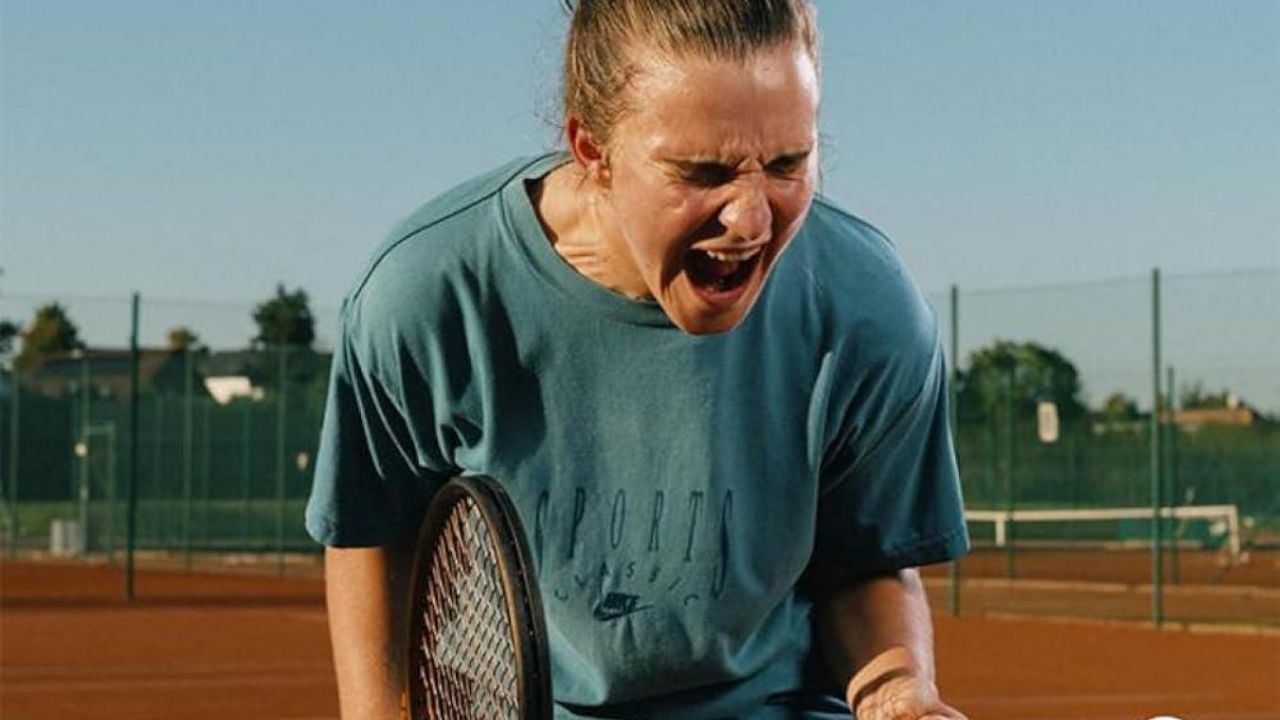
Julie (Tessa van den Broeck) has the unconditional will to bring it to something on the tennis court.
The focus of the action is Julie (Tessa van den Broeck), a brutal tennis talent with a probably great future as a professional player. She trains at the Belgian tennis academy and initially learns that her trainer Jeremy (Laurent Caron) was suspended. It seems like there could be a connection with the suicide of another tennis student. The entire school is called to support the investigation.
Everyone participates, only Julie holds back. She is silent – and not aggressively or defiant, but in a very unobtrusive way. And she just keeps going, pulls through the training and keeps yourself fit. She still secretly keeps contact with Jeremy while getting used to the new coach Backie (Pierre Gervais). But the more the pressure on Julie increases to comment on Jeremy, the more July's regulated and highest discipline is out of the beat. Her school grades worsen, and her tennis also suffers. But Julie stays still …
When does it burst out of her?
The big question that hovers over the film like a Damocles sword is: What actually happened there? But interestingly, the answer does not play so big, even if it quickly becomes relatively clear that Jeremy continues to influence Julie and apparently accepts the power he has about her. It is much more important and central to the film's testimony: Why is Julie silent? What makes you hold back like that? Can't she or do you want to talk about what happened between her and Jeremy? And above all: how will Julie choose? Will she still comment at some point?
Leonardo van Dijl tells his story in long attitudes, with often rigid, high -contrast images that work a lot with light and shadow, of an unusual but understandable self -discovery. There is a young girl, still in puberty, and van Dijl shows her face, in which a lot and little takes place at the same time, often as a shadow tear in the profile. The young face looks rather quiet than melodramatic. Julie's development is very exciting to look at, especially at the beginning. Ultimately, what she experiences and how she deals with it is not only the processing of a possible trauma, but also a process, one that takes time. This development has a lot to do with tennis as a sport and as a psychological challenge: the poker face, the iron discipline, the quick switching of attack on defense, without the opponent realizing this. Julie's behavior is most likely to be a long basic line, with this way of playing for the audience – and also here – sometimes significantly less entertaining than for the players.
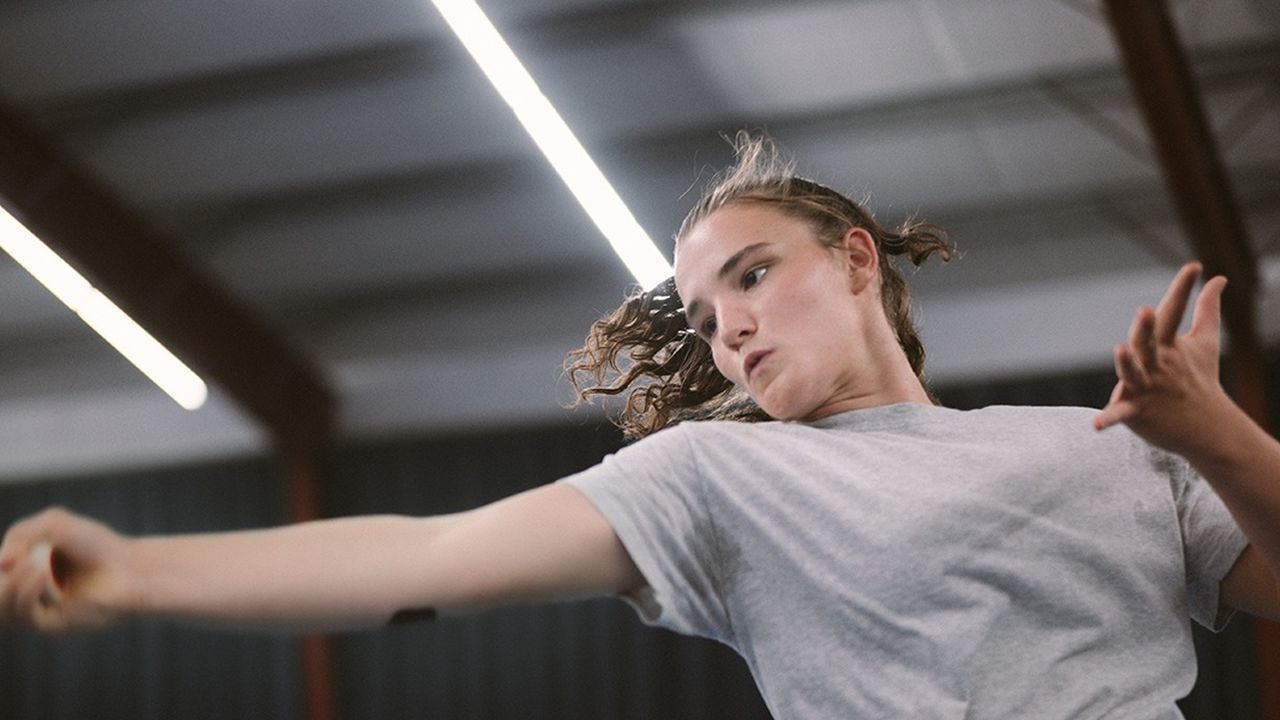
On the tennis court, Julie knows exactly what is the right thing – unlike in life apart from the course.
The tension increases, the longer Julie apparently stays by. But like a tennis player who is not idle in the basic lineaway, but how a rabbit runs back and forth and keeps an eye out for the gap that she can use for an attack ball is constantly busy, with herself. It remains unclear whether she just wants to avoid silence to say something wrong, or whether she is planned and intended to process the action herself. It is probably a mixture of both, although it speaks for the intelligence and also for the tactical understanding of this young girl that she does not bend the pressure from all sides, but persistently continues to be silent. The fact that so little happens that so few influences and changes from outside penetrate into July's life also makes the film brittle and gives it a certain inaccessibility, which in turn has a lot to do with Julie as a character.
Tessa van den Broeck, even an excellent tennis player, plays Julie with a highly professional minimalism, who has something heartbreaking in his withdrawn, unsentimental nature. Julie is not a loner – the girl actually communicates almost normally with her parents and with her training group, as long as it is not about Jeremy. But there is a certain tendency that words are not important to them and are becoming increasingly less important. This also applies to friendship with her teammate Laure (Grace Biot), in which the sheer presence is becoming increasingly important than what is spoken between them. And maybe that's the message of the film: if there are problems, it is more important to be there for each other than say anything.
Conclusion: Julie's silence makes the film exciting, especially at the beginning. Unfortunately, the impression will be a bit used later. The contrast between the almost documentary -filmed training sessions with their very own, powerful dynamics and July of general reluctance outside the tennis court also increases the impression of the emotional stress under which the young athlete is under, as well as the very special, used soundtrack by Caroline Shaw at some point from the style of style. Nevertheless, the film remains impressive – as a statement of self -discovery and as a very special cinematic examination of the topic of power and abuse of power, not only in sport.