
The Catalan filmmaker Albert Serra has long since made a name for himself as a uncompromising author. His works refuse conventional dramaturgies, rely on long attitudes and a contemplative view of history, power and transience. Whether in “the death of Louis XIV.” Or “Pacification” – Serra deconstructs narrative by charging them with patient silent, unexcited observations and artistic radicality. With “Afternoons of loneliness“He continues this approach and ventures into a topic that is as traditional and controversial: bullfighting.
The documentary, which was awarded the main prize (Golden Musschel) at its world premiere in the competition of the San Sebastián Film Festival, is at the interface between documentary precision and cinetic meditation. Without voiceover, explanatory intermediate title or a real tension sheet, Serra shows the world of Toreros in always poetic, but sometimes extremely disturbing images.
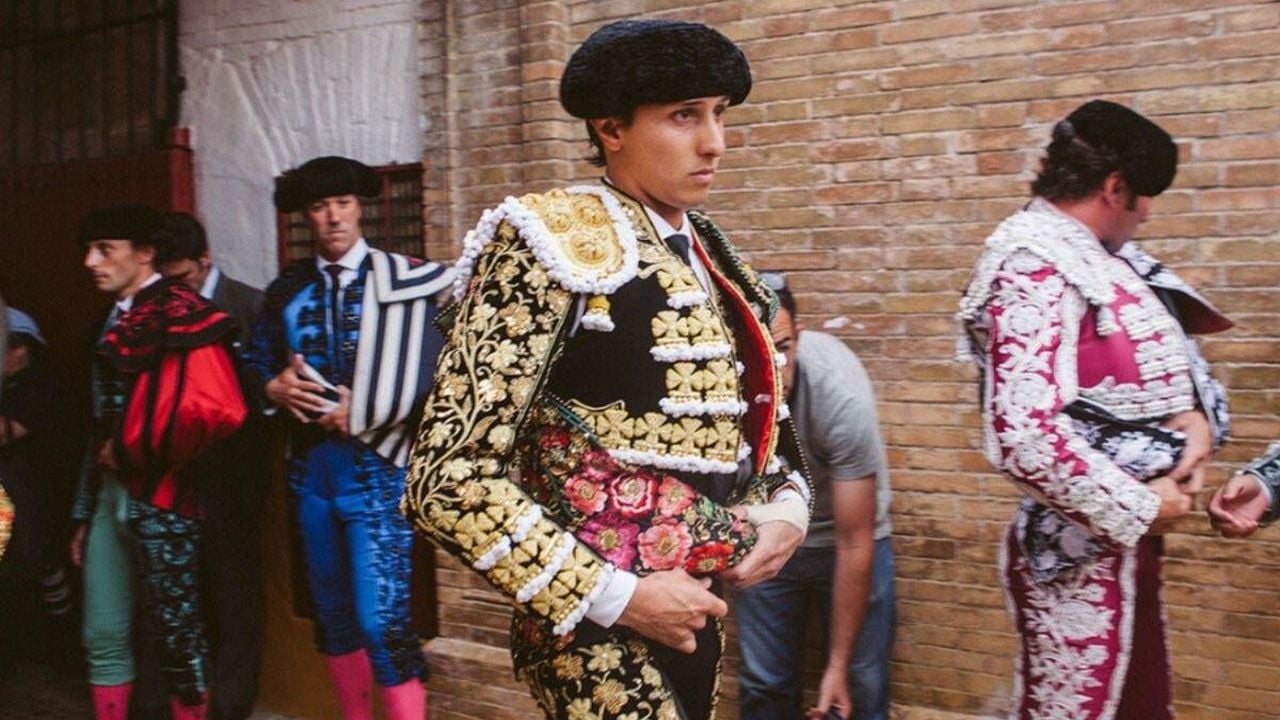
Even creating traditional clothing is an excessive ritual.
“In the afternoons of loneliness” accompanies the celebrated Peruvian Matador Andrés Roca Rey in his artistically embroidered dressed dressing in his artistically occupied clothing; Watch him when he drives his Torero team to the bullfighting arena and finally gives himself in mortal danger when it comes to the direct confrontation with the bulls. As a Matador, he is the main gate, on which all the eyes are directed when he dances around the bull to kill him in the grand finale of the fight. Serra keeps the procedure from dressing, car journeys to the arenas, the individual steps of the bull fights and the return journeys again and again as in a loop. Charged with religiosity, tradition and blood, the film has its audience immersed in a world that has existed for centuries and has been controversial at least for decades.
“In the afternoons of loneliness” does not glorify the bull fight, but also does not explicitly condemn it. Rather, Serra is interested in the details of the ritual. Without a valuable comment, he shows how the bullfight from religious and machistic structures feeds: the arena becomes a sandy stage of a bloody spectacle in which masculinity, courage and dominance are celebrated, in a strange aesthetics that reminds of sacred rituals.
First glittering, then bloody
Just like the dressing process of the Matador: The young man is lifted, dragged and laced in his glittering, skin-tight suit-a process that reminds of creating a corset in earlier times. Roca Rey awesome kisses a Madonna portrait and a rosary that he surrounds himself. Only when the Matador can take off its blood -soaked clothes after the fight did it survive. Another time he escaped the bull and is celebrated by his team members as a superhuman hero.
The representation of the bulls is as meaningfully charged as that of the Matador: In the opening long settings of the film, the director focuses on the eyes of the animals, their nervous snorting, shows their tremendous strength and vulnerability at the same time. During the entire film, the camera remains very close to the animals and Andrés Roca Rey, without ever revealing the dimensions of bullfighting arenas or the audience. Nevertheless, the loud clapping of the excited viewers is omnipresent when the Matador, celebrated as the “Messi of the Toreros”, piles up the bull and strips so close past it that its down -to -flow blood colored its glittering gear.
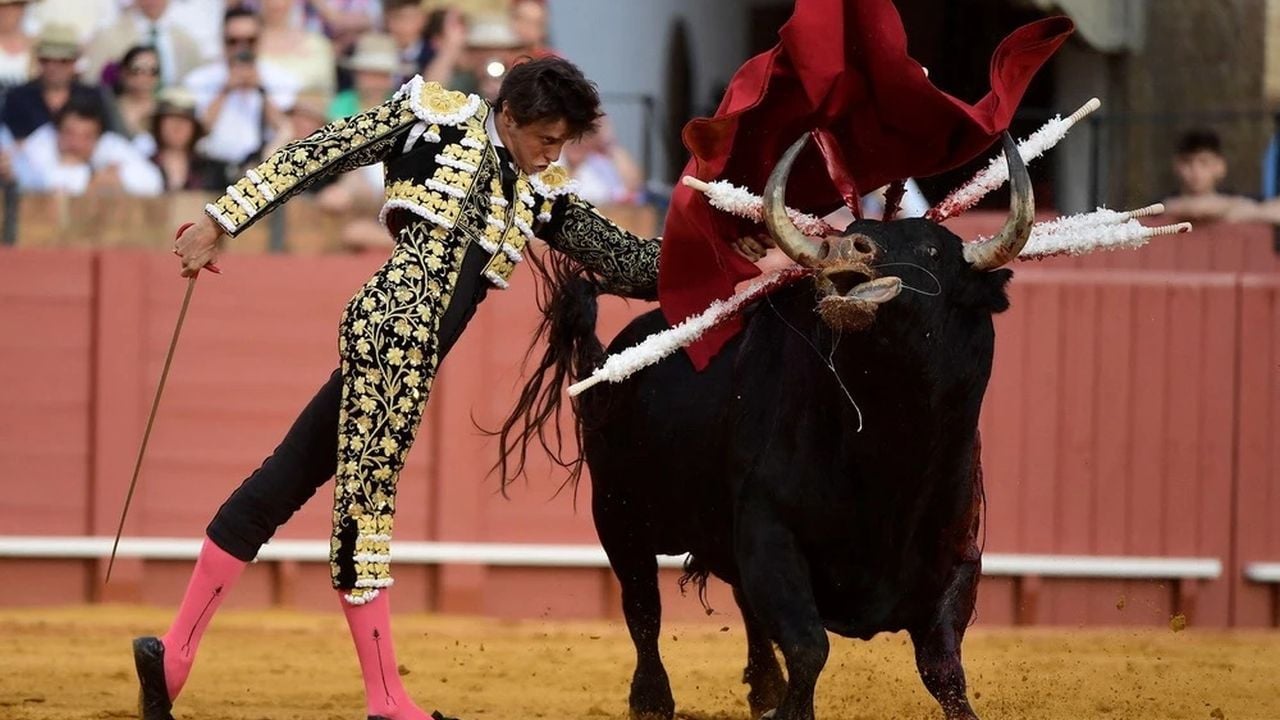
Cultural tradition or cruel relic – Albert Serra leaves it to the audience to make a judgment.
The camera is only interested in Roca Reys and the bloodthirsty fight, which always only begins when the massive animals were put in a critical condition by the Torero team by means of spear and pliers. As immediately and intensively Serra captures these confrontations, he adheres to the recurring sequence of scenes for too long. “In the afternoons of loneliness” captures a place where physical strength, staging and fatal consequences combine. The film shows how the powerful bulls and the festively dressed Toreros meet – in haunting fights, the exits of which are sealed from the start.
The spectators are thrown back on their own perception without explanatory intermediate tones. Is the bullfight a cruel relic of the past or a living tradition rooted in Spanish culture? Serra does not give answers, but confronts his audience with the raw reality of the fights – from the silent, almost meditative moments of preparation to the brutal killings of the animals and the display of their cut ears.
Conclusion: “In the afternoons of loneliness” is not a film for everyone, Serra refuses to classify too uncompromisingly, too relentlessly and with (to) repeating bullfights, he looks at a controversial ritual. He illustrates the fascination of the fatal struggle – without classification, without distancing, but also without any transfiguration. Instead of a moral attitude, Albert Serra presents a raw, unadulterated observation and challenges the audience to deal with what is seen.