
Eight years ago, Angelina Maccarone's script became “Clandesty“With the Golden Lola for the best still undiminished script. The fact that it took so long until the finished film now comes to the cinema tells a lot about the German film funding structures. The fact that the content of the dramas continues to appear highly up to date is said a lot about the social and political issues that are still important in Germany. In a nested structure, Angelina Maccarone from Four People who have to do with the so -called “refugee problem” in their own way. An ambitious undertaking that in the attempt to shed light on its topic from different perspectives, often broken, shortened and – particularly unfortunate – reduces a migrant figure to the keyword.
A stop shakes Frankfurt. The suspicion of an Islamist group quickly falls. The politician Mathilda (Barbara Sukowa) has the reputation not to be particularly hard in order not to say rigidly against increasing migration in Europe. Her new assistant Amina (Banafshe Hourmazdi), even a migrant origin, serves as a fig leaf, even if she appreciates the lawyer's intellectual skills. For her old friend, the gay artist Richard (Lambert Wilson), Mathilda is even willing to ignore her positions: on a trip from Morocco to London, stops in Frankfurt – and suddenly has a blind passenger in his luggage. Malik (Habib Adda), his young lover, who may have engaged himself to Richard to find a way to Europe and thus in an apparently better life …
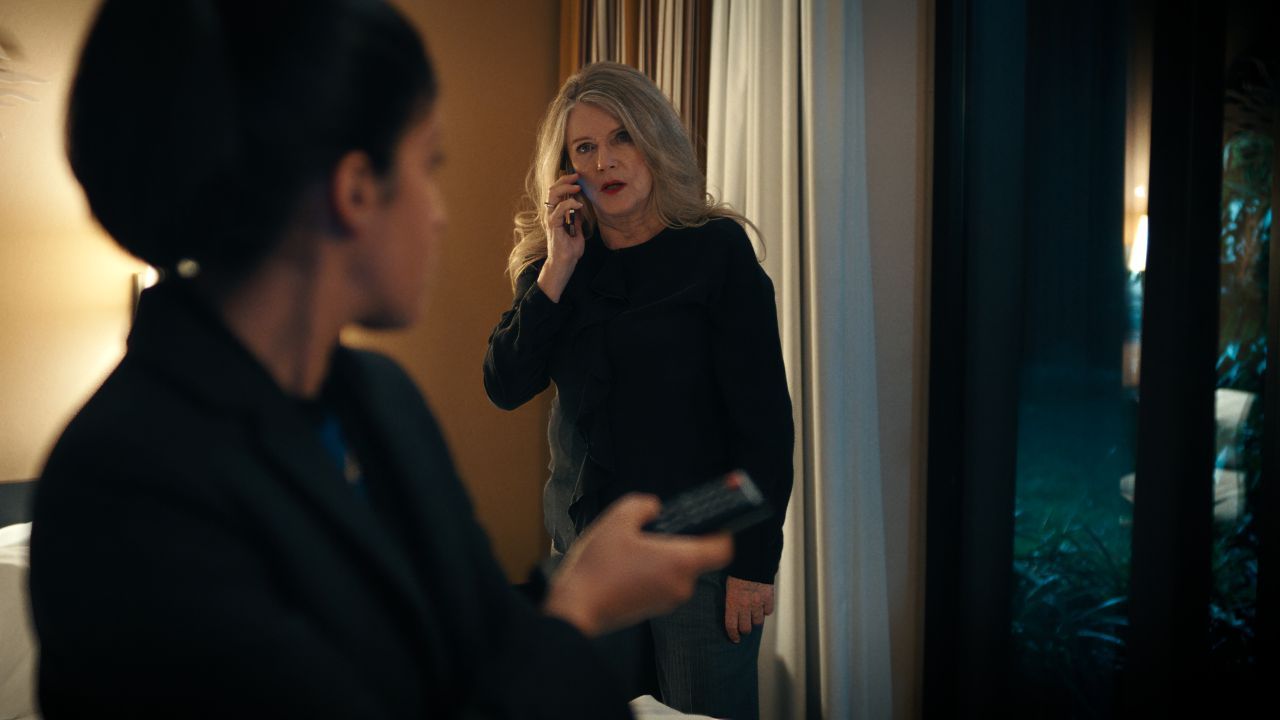
At least in her political appearances, Mathilda (Barbara Sukowa) drives a tough anti-migration course.
On paper it may have been artistically possible, as Angelina Maccarone tells in her script of four figures, each of whom is devoted to a longer section, the stories of which are more, sometimes less striped, influence, apparently questioning fixed ideas. In a filmed form, on the other hand, the construct keeps groaning and creating, the figures often appear less than round characters with depths than types that are supposed to fulfill certain functions in order to describe the central topic as comprehensively as possible. Nothing has changed in its importance in the many years between the letter of the book and publication of the film, on the contrary:
The question of how refugees should be dealt with in Europe and Germany remains acute. Immediate occasion for MacCarones writing may have been 2015, i.e. Angela Merkel's decision, to let the borders open and thus hundreds of thousands of migrants, who mostly came from Syria and Afghanistan at the time. A humanitarian act that was probably right and important at the time, but the consequences of which have now led to a shift to the right of politics, which not least made the AfD the second strongest force in the Bundestag.
Much seems insanely forced
To tell about the often hypocritical handling of the Germans with the refugee issue, looks like a necessary approach, but of course also a delicate. As a left, liberal filmmaker, Maccarone does not want to criticize refugees, of course, on the other hand, she is too wise, so as not to know that there are definitely refugees who use the system and, albeit very rarely, do attacks. Malik, for example, came to Germany without a question, perhaps also blinded by illusions. He still has rights, but to what extent does a politician like Mathilda have a certain responsibility for him, even if she got in touch with him without her will?
Maccarone, especially this figure, forced the contradiction in particular with extreme screenplay structures, which sometimes only serve the purpose of raising the moral index finger. It is the reasonably simple picture of a politician who preaches water and drinks wine. It apparently does not belong to any specific party, is referred to as a minister, even if she rushes against foreigners at the AfD level. She sits in Frankfurt, but at the same time seems to have a function with the EU, sometimes it looks hard -hearted, sometimes tolerant.
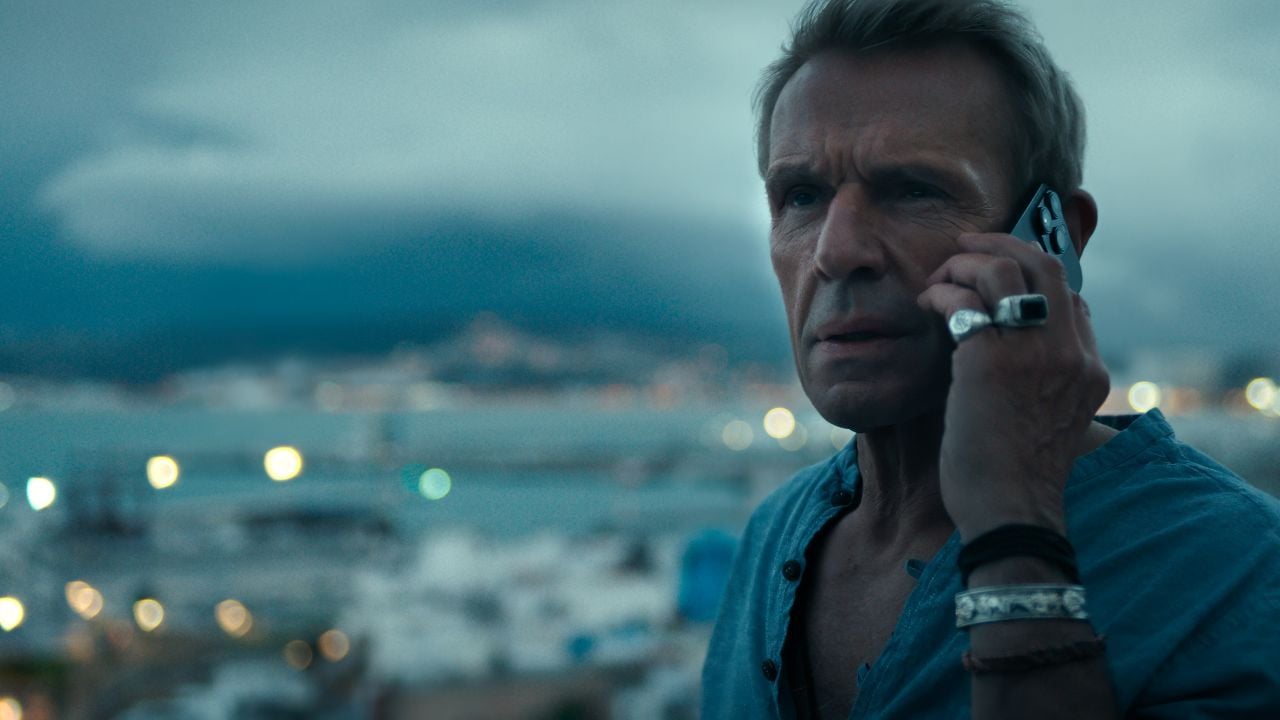
Richard (Lambert Wilson) cannot be sure whether his lover will only use it or not.
The other figures, Amira, who once asks her mother, seem similarly constructed, why she has not learned Arabic: so that you can integrate better, says the mother in a sentence that looks less lifelike than academic. And then there is Malik, the catalyst of events, the most fragile figure, but which still looks like no other means to an end like no other. As a young man of migrant origin, this figure is likely to be removed from Maccarone's own experience than everyone else. The fact that this figure is reduced to the keyword does not surprise, but it seems all the more regrettable, since the intentions of “Sclandestin” are unquestionably honorable. As a result, the ambitious drama does not look like a lively, multi -layered film about the refugee issue, but like an excessively constructed, often didactic pamphlet.
Conclusion: Angelina Maccarone tries to tell in her narrative structure in her narrative structure in her polyphonic drama “Sclandestin” of refugees and how to deal with them. A noble concern that only leads to a convincing film in moments. Most of the time, the figures do not act like real-life characters, but like types that are supposed to fulfill the mere function in a (over-) constructed construct.