The anti -lock law will be key to oil businesses in Venezuela after the closure of Chevron operations ordered by the US, according to experts. That standard is “fertile land” for anonymous and potentially corrupt operations, they warn.
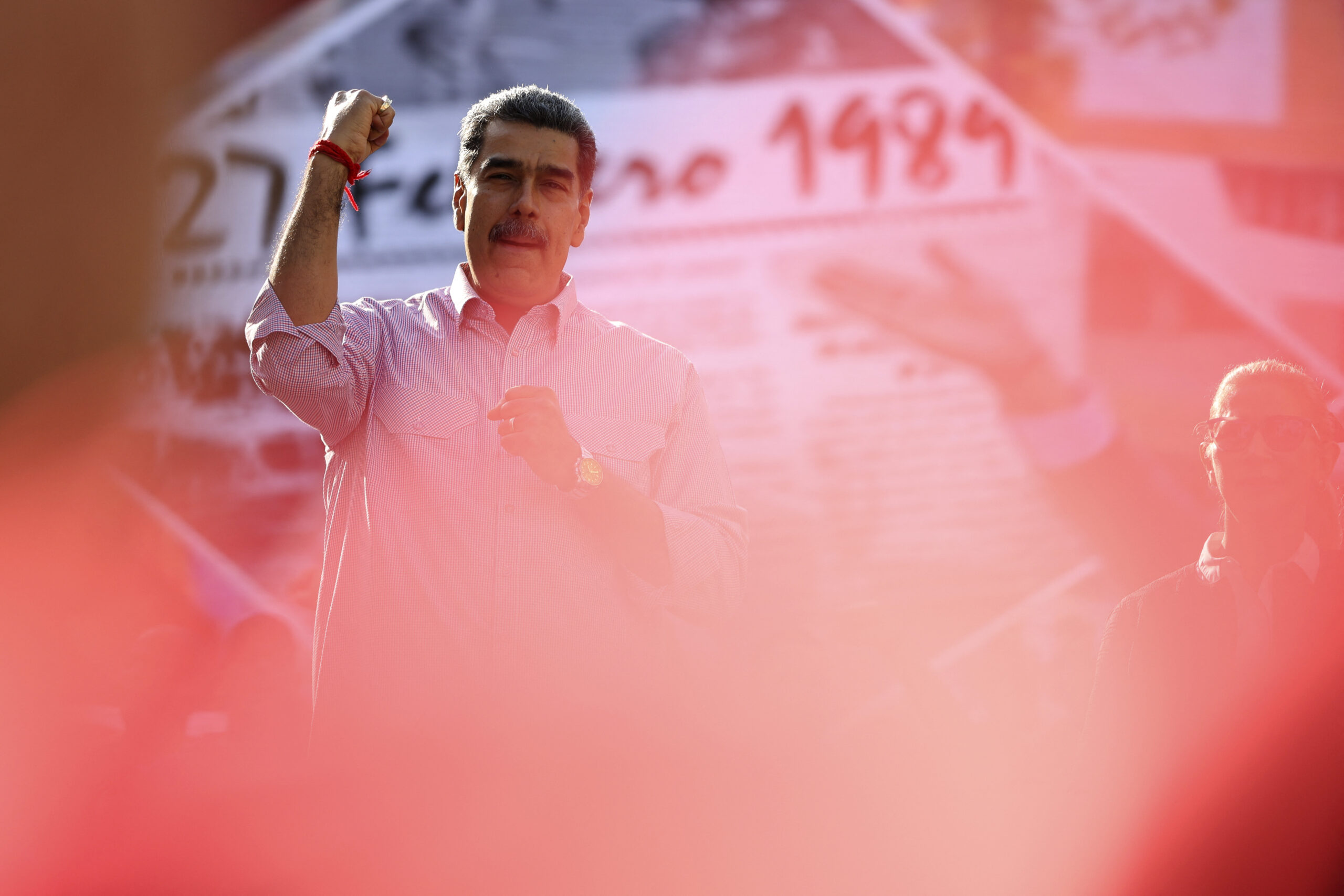
The Venezuelan government has a controversial law that will allow it to do business with little transparency to keep national oil production afloat after The revocation of the concession to the Chevron firm On the part of the administration of President Donald Trump, this week, economists warn.
The anti -locking law, approved in 2020 by the official National Constituent Assembly in response to foreign economic sanctions, allows the government to advance businesses in the hydrocarbon sector without accounts, consult the Parliament or publish data on these farms, even keeping the identity of contractors secret.
The Venezuelan state PDVSA, who produced more than 3 million barrels per day at the beginning of the century, the triple of her operations reported in January 2025, began operating based on the anti -locking law immediately after her promulgation, according to independent experts, such as economist Manuel Sutherland.
“This law facilitates processes so that there is more darkness, more arbitrariness and discretion in the allocation of contracts and less accountability, even advancing privatization processes” that contradict or suppress articles of other regulations, such as the Hydrocarbons Law, and potentially harm the state's assets, comments to the Voice of America.
Its article 19, for example, authorizes the Venezuelan government to “inapply” laws that they cannot apply due to sanctions and overcome their “obstacles” or “compensate for their damage.
Its standard 37 allows “a transitory regime” to classify documents with “confidential and secret content” in order to protect the Executive's decisions in these cases.
Any authority or body of the public administration in Venezuela can also give a “character of reserved, confidential or limited dissemination” to the files of operations that allow counteracting the sanctions. The Comptroller General is also obliged to coordinate with the Executive its access to these archives.
The Venezuelan opponents criticized their promulgation, first, for having been sanctioned by a constituent convened without respect to the constitutional norm or previous referendum, according to their arguments, and then, because it would not have powers to create laws, but only to modify articles of the Constitution.
Sovereignty with risks
The Venezuelan government criticized the decision and launched a program to achieve what it called its “sovereignty” in the oil industry, without advancing further details about it.
José Guerra, economist and deputy elected for the Venezuelan opposition in 2015, is convinced that the government has a “legal basis” to try to replace Chevron in those mixed companies where they shared shares.
“They could look for companies that want to go to Venezuela with all the risks of the sanctions. I don't think they are western, nor great, ”says Guerra to the Voaalthough “nobody wants to expose themselves to a Trump threat that could mean market loss or financial difficulties with the United States.”
Based on the anti -locking law, the Government could hire signatures of Iran, Algeria or other nations of Eurasia that are “willing to take risks” to maintain and exploit wells as not only Chevron did, but 3 European companies whose operations in Venezuela could be closed shortly, esteem war.
Iranian, Chinese, Russian and Indian companies, among others, collaborated since 2019 with the Venezuelan authorities in their energy businesses, according to official and press reports.
Another of the tasks that will have to assume these potential new companies in that new phase would be the importation of the diluent necessary to process the crude oil of the Orinoco belt, which was imported by Chevron until the publication of license 41a.
Concern for corruption
The concern of war and other independent experts is that the current legal framework disadvantages the transparency levels of Western companies.
In the case of Chevron, it complied with the regulations of transparency both in the United States and in Venezuela. “Chevron had regular operations with two banks in Venezuela, paid suppliers in dollars and exported with charted ships with their own ships,” he says, without much faith in which he occurs in the same way with corporations.
“There is going to be a phenomenal corruption,” he says, mentioning irregular operations reported in recent years, such as the off radares of “ghost” tanking, the taxation of loading, furtive transiers of Venezuelan oil and undocumented payments.
In 2023, in full validity of the anti -locking law, the government and the public ministry denounced a plot of corruption in PDVSA with a damage to the public treasury calculated by at least 3,000 million dollars and for which Dozens of officials were arrested.
“The law (anti -lock) will create fertile land for opaque businesses, because they are in anonymity, they are not obliged to report. It will generate monumental corruption, ”insists war.
No access to capital
Chevron, who produced just over 200,000 barrels of crude oil in the oil fields of Venezuela, will have to close its operations before April 3, that is, in 30 days from the general license 41a published by the Department of the Treasury.
Independent estimates calculate that the 41A General license affects an average of 300,000 barrels of crude oil produced by 4 foreign companies in Venezuela, as well as its subsidiaries and contractors, that is, about 30 % of the total production.
Also read: Chavismo without Chavez: 12 years of crisis, purges and mutation to an authoritarian model in Venezuela
Guerra notes that anti -lock law could give the government alternative to the new status quo of its oil industry, but does not solve its lack of access to international capital. Chevron, quotes as an example, made its own investments with the previous license.
“PDVSA does not have access to the international market,” he says. “They can have new partners who operate the fields, yes, but I see highly difficult for members to put capital.”