
“Sometimes I like to see things a little blurry,” says Donghwa (Ha Seong-Guk), the protagonist from “What does that nature say to you“, Once to his father -in -law in Spe. Actually, he has to wear glasses all the time due to his bad eyes, but even the not too sharp look has its charms. A preference in which the director Hong Sang-Soo (“The writer, her film and a happy coincidence”) seems to be agreed to him, because even his new film indulges in the deficit aesthetics of low-resolved digital videos. In it, he does not go as far as at “in Water”, who is probably the most radical work among Hong's recent ones, a shadow-like study in himself for just an hour. But a conscious and well thought -out artistic decision is always the choice of blurring here.
In contrast to the “in Water”, which is at the core, “What does that nature Say to you” comes in the form of comedy – as open as long as it has not always been between comedy, melancholy and sneaky sharpness of Hong. His protagonists always appear to him as a revenue of the same figure ensemble, and here they are put into a constellation that is almost reminiscent of Hollywood comedies such as “My bride, her father and I”: Donghwa-mid-thousand-free, talent-free wannabe-poet , and despite his rich and successful father, practically medium -sized – after three years the parents and sister learns for the first time to know his girlfriend Junhee (Kang So-Yi). Actually, he just wanted to drive her home and say hello, but Junhee's father Oryeong (Kwon Hae-Hyo) needed to spend the whole day in the magnificent house.
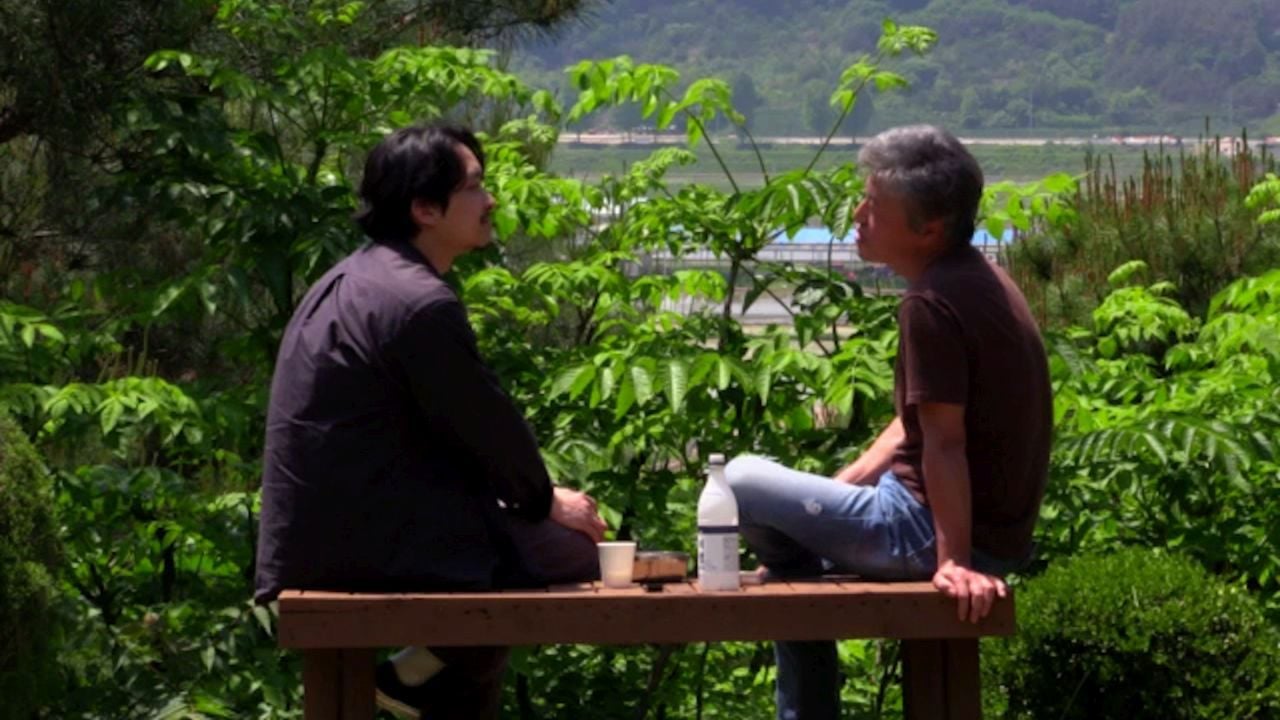
Father Oryeong (Kwon Hae-Hyo) is formally super nice compared to his potential son-in-law, but small tips still seem through all the time.
The family property had once built the father on a small mountain, and put on a park around the house – for his cancer and now deceased mother, who was supposed to spend a nice retirement there. According to Junhee, he was a good son – a little too common – a bit too often than that not anything should seem strange. But with repetitions steadily recurring sentences, “What does that nature say to you” still work a bit more obsessive than the films of Hong always do. Donghwa's car – a fairly old, somewhat rickety used car, which Junhees family appears to be little in terms of cider – is always about the money of his successful father.
He can be sorry for this Donghwa, as he has to make a long-term expression for a long day and, given the constant, passive-aggressive, the top of his potential parents-in-law performed with the most polite smile. And you are a bit happy when it ends in the end everything burst out of it, of course-like every authentic emotional expression at Hong Sang-Soo-by the alcohol frenzy. However, there is no soju here, but Korean rice beer Makgeolli, red wine and a brown schnapps, probably brandy or cognac, flow into the Hong-Kosmos in the Hong cosmos in last year, in the Hong-Kosmos-until all inhibitions fall and The truth comes on the well -filled dining table.
Even Hong Sang-Sooo is rare so funny
The way there is often funny to scream, and “What does that nature say to you” is definitely the funniest film that the frequent filmmaker has made since “The Woman Who Ran”. And yet darker topics also write down, thoughts of illness and mortality, to a finiteness that has increasingly appeared in the apparently the same topics, figures and conversations of Hong in the apparently forever. The terminally ill actress in “In Front of Your Face” (2021), who blurred the pictures indicated in “In Water”, here the grandmother, who died of lung cancer, which Junhees left alone in a house that was too large: Thoughts Physical decay and your own mortality recently take more space in Hong's films.
However, they do not necessarily become old age, their view of their protagonists remains sharpened, but not necessarily mercilessly. Perhaps this is the reason why so many people feel watching a Hong film as if they were coming home. Because of course these Hong protagonists are all-from the materialistic parents, who with a pleasant humiliating, who is with a smiling manner, over Junhee, who does not jump to his side, to Donghwa itself, whose poems are bad and his life plan is doubtful . They all don't lead to really successful life, these artists at Hong, but beautiful and somewhat pathetic sentences to art and boheman life all lead them in their mouth.
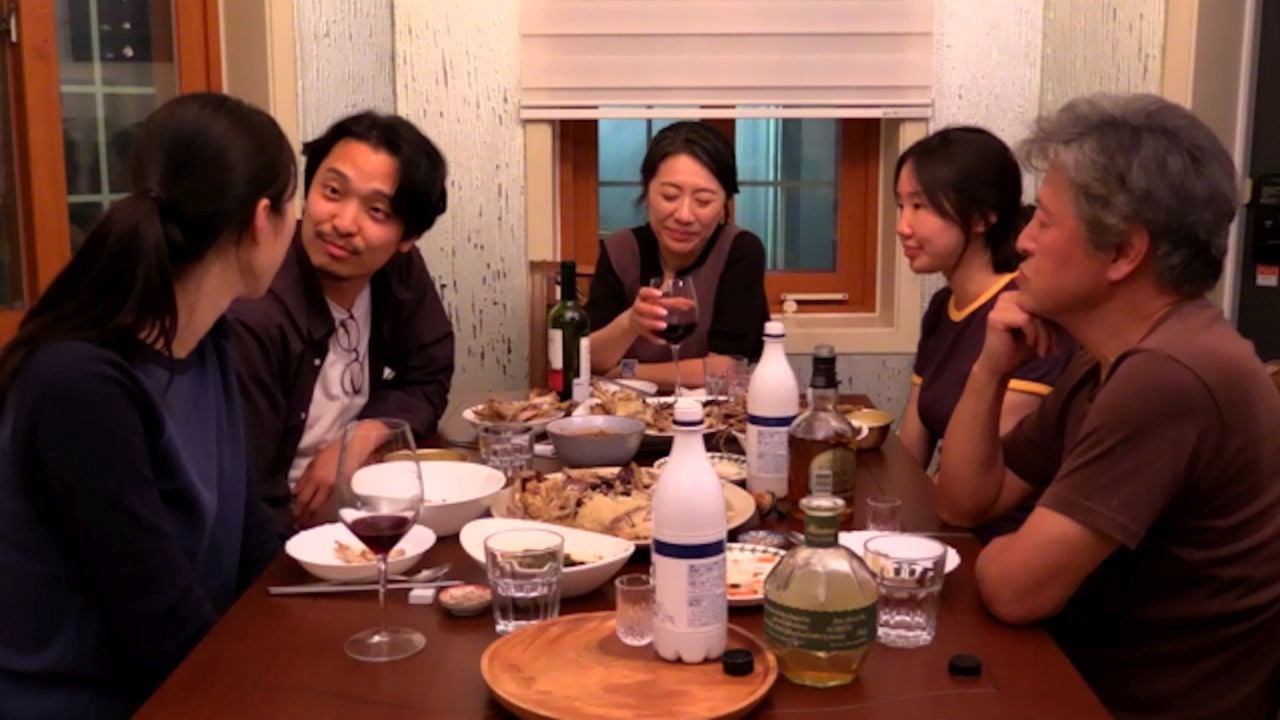
As always at Hong Sang-Soo, there is a lot of fermenting and drunk even more.
So all whistle, but they are our whistles in which we recognize ourselves in our own pipe. They are terribly bad decisions on the ongoing volume, and also that Junhee and Donghwa will not go well with it is actually obvious. But precisely because all of these figures are visible in all their ridiculousness, there is also a certain grace. Because Hong succeeds in making them recognizable in all their fallability without ever completely rejecting them. Instead, we can reflect in them, with our own mistakes and all the bad decisions that we have made and will still make. As whistle under whistling.
The word “wisdom” appears several times in “What does that nature say to you”, as something essential that you need to create great poetry. Hong's cosmos is populated by figures that may be far from the wisdom – but this big word fits the work of this important contemporary director, a bit absurd, maybe not that bad. In the end of the cinema, it is perhaps most likely to be related to the masterpieces of the great Frenchman éric Rohmer, because there we too again and again we watch people who are wrong, don't be able to do anything else, who end up with empty hands and yet again and again Start new – and make the same mistakes again. In this regard, there may still be a sentence of the age mild at the end of “What does that nature Say to you”: it's all an experience. And whatever happens, it's okay.
Conclusion: The 33rd film by the great South Korean director Hong Sangsoo is one of his funniest ever-and overall one of the best of the last few years in the work of the diverse filmmaker. Because although he is often screaming, “What does that nature say to you” also leaves room for sadder intermediate tones – and continues to think about mortality, which has increasingly enrolled in Hong's work since his own films. A big, funny, evil and yet strange comforting film.
We saw “What does that nature say to you” as part of the Berlinale 2025, where it was shown as part of the official competition.