
After the killer the spirits come. In the bloody slasher “in a violent nature”, the world could only be seen from the eyes of a Jason-Voorhees-like butcher-and now the next horror experiment is followed by an interesting change of perspective. Steven Soderbergh staged in “Presence“One at first glance classic haunted history, but she spits up with a central question: What if we, the audience, get no ghosts at all, but are transformed into a ghost?
In this game with the perspective, the director's Oscar -winner, for “traffic” Oscar -winning, is even more consistent than the “in A Violent Nature” mentioned. At Soderbergh, the camera fully melts from start to finish with the eyes of a disembodied presence between this side and the beyond, which simply cannot find peace. The effect that occurs is amazing at least in the first few minutes. Then the camera looks out of a window on the street, then pulls back, goes down the stairs in the house, roaming the empty rooms before hiding in a closet. As is well known, ghosts are particularly popular there.
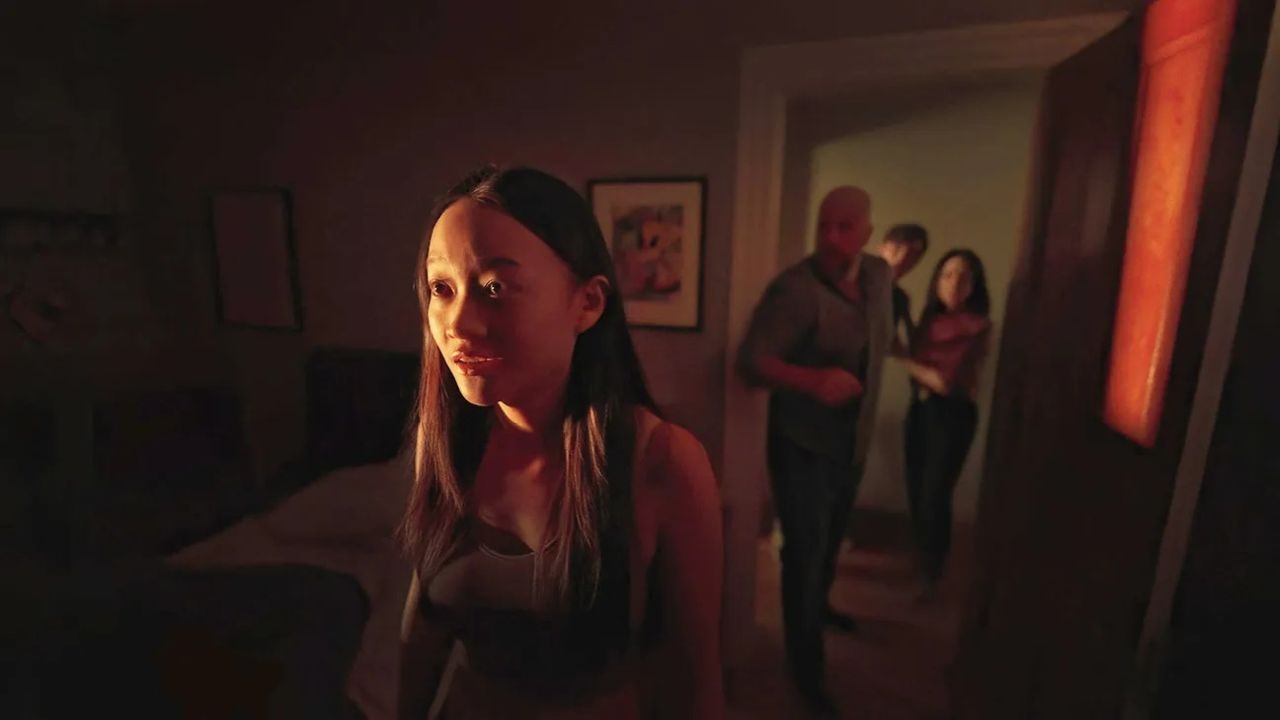
Chloe (Callina Liang) first perceives an unusual presence in the new house.
Soderbergh quickly makes it clear that it is more than an objective observer in long settings. She herself is the scary in these pictures, something lively, an invisible body and a subjective awareness, an obsession that has been nestled in the world. Only: The ambitious concept of telling such a film completely from the perspective of the supernatural is unfortunately increasingly on the spot at a certain point in time.
This starts with the fact that “Presence” initially stiffens on a very interchangeable plot. Then a broker enters the house, which is immediately relocated by a family of four, Paynes. The daughter Chloe (Callina Liang) mourns the loss of her recently deceased girlfriend and is the first to start to smell the ghostly presence in the house. Her brother Tyler (Eddy Maday) has only ridicule for this. The parents Rebekah (Lucy Liu) and Chris (Chris Sullivan) have to struggle with their troubled marriage until they too notice the rumbling spirit in the house …
New perspective, familiar motifs
So it is discussed about faith and superstition and all sorts of mental ballast that is on the family members. And of course a medium should not be missing that is called up to contact the dead. Surprisingly, the action and character study of “Presence” only becomes when Soderbergh mixes a thriller plot to haunted history, which provides the question of the actual threat with other twists. This is also followed by a break with the visual expectations. “Presence” lives less about fear and creep, but dives his ghostly perspective, especially from sadness, which is looking for contact and redemption.
The only shame is that “Presence” misses the time to further sharpen his formal concept. Instead, he delves, especially in all the family dramas. At the same time, he always throws you back to his technique so much that it is difficult to let any of these balanced topics related to grief, education, the relationship with parents, bullying, drugs and abuse. They often only feel like mechanical processes in the scenes of a large virtual simulation through which you move from room to room.
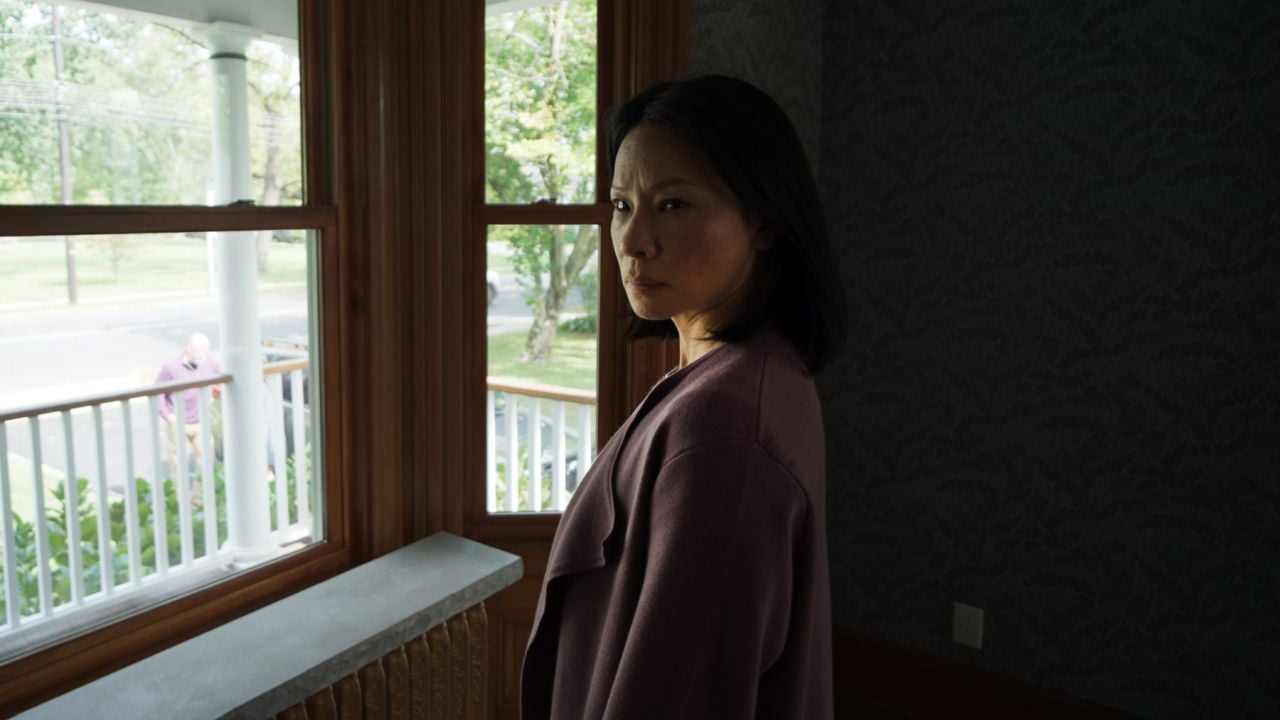
Rebekah (Lucy Liu) is so fixated on her son's sports career that her daughter's problems have to be behind again and again.
The idea of equating the camera with the ghost, i.e. the supposed threat in the haunted house, has a lot of potential. After all, a whole lot is questioned: How the illusion of a conventional feature film works? How do we normally perceive feature films? Where else the technical apparatus is to be hidden and ignored, it is suddenly exhibited as an undoter organism. Wherever he staged a spectacle as an observer, he is suddenly questioned in his activity. He is recognizable as a participant and is played directly. Figures are startled by him and look back – to the audience in the cinema.
This results in impressive tilting moments! Especially when nothing spectacular happens, but the camera suddenly moves the actors uncomfortably close. Or if you are looking for the intimate sphere of figures, for example when observing the closet, and thus emphasizes your own voyeurism. “Presence”, presence, present, what does that mean when you speak of films? First of all, only the technical fixation of a presence of people and objects. The audience is spatial and time away and yet you feel connected to each other.
More than just a technical gimmick?
The captured presences, which are projected as a play in the cinema, are always ghostly. They are here and there at the same time because all parties of film production and reception have to do the absence of the others. At this point, film and theater separate and it gives great pleasure to think about such fundamental peculiarities based on Steven Soderbergh's experiment. But honestly: is that really so original in the end?
It is no longer a novelty that the equipment aspect of the film can refer to itself. Likewise, the game with the arrival and absence of an audience. Even in the popular superhero cinema (keyword: “Deadpool”), figures have long been trying to contact their viewers and break up the illusion. In addition, “Presence” must be classified within the horror genre in traditions that have now produced far stronger examples. The fact that the film is transformed into an eerie technology and the uncomfortable comes from the media pictures itself have works such as “Ring”, the “Paranormal Activity” series or recent examples such as “Skinamarink” and the desk pot film “Host”.
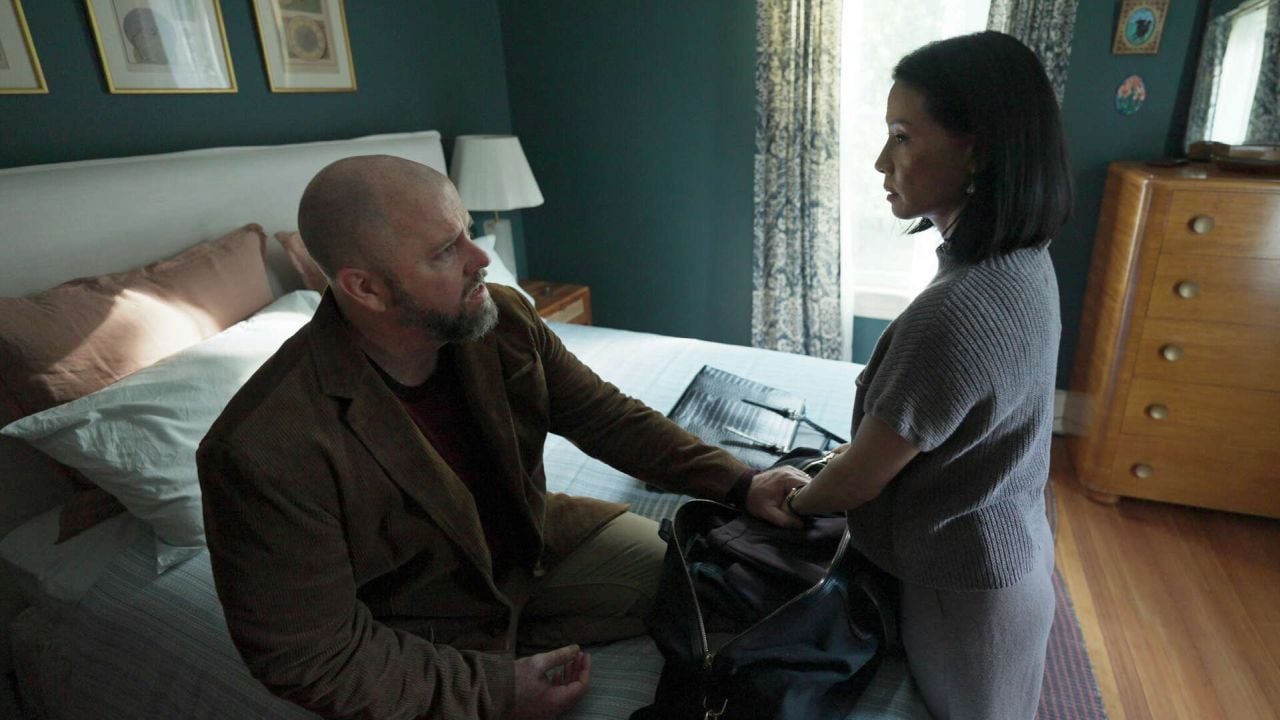
The parents are so busy with their marriage crisis that the spirit has to exert themselves with them in order to “attentive” to themselves.
If you want to gain exciting thoughts and impressions of these meta levels, you now have to come up with a lot and here “Presence” unfortunately lies too quickly on the lazy skin. Steven Soderbergh succeeds in a consistently surreal, strange atmosphere. You have to give him that! Unless you sake after a few minutes of seasick with all the dynamic swivels and camera rides. But his always the same wide-angle shots and movements by the house are marked by such uniformity and so few aesthetic highlights that they never appear completely as a well-thought-out concept, but rather as a vague gimmick.
This gimmick is also increasingly forced into the scaffolding of an action and role instead of letting your own alienation act as a mystery, ambiguity and thought. When books are suddenly moved by the invisible hand, contact attempts to wobble or the view wanders and chaos donates, in his game it irritates with causes and effects and the disclosure of how rooms are staged. But it also results in any and certainly no exciting pictures. “Presence” remains too cropped for an interpersonal drama and far too tame for a horror film. You can change perspective so often if it only shows formulaous and unbalanced.
Conclusion: Steven Soderbergh's haunted history shows the audience through an undead eyes. “Presence” has interesting approaches between horror and family drama to think about the cinema, but in the end neither in his genre places nor as a media experiment is completely convincing.